Tapping Into Possibilities

  • Home
  • About
    • About Margy
    • Tapping Into Possibilities Coaching
  • Services & Products
    • Services
    • Products
    • What Is/Benefits of Bemer
    • Bemer Products
    • Light Therapy
  • Blog
  • Get In Touch
  • Articles
    • C is for Cacao
    • Coenzyme Q10
    • Cold & Flu What Can I Do?
    • Labyrinths
    • Magnesium 101
    • Neck Exercises for Killing Two Turkeys with One Stone
    • Oil of Lavender
    • Peppermint Oil
    • Sleep
    • Vitamin D3
  • Facebook

Miracle Shall Follow Miracle

April 22, 2019 By admin Leave a Comment


Today is a day of completion. I give thanks for this perfect day. Miracle shall follow miracle and wonders shall never cease.” Florence Scovel Shinn, New Thought spiritual teacher and metaphysician, The Game of Life and How to Play It (1925) p. 33.

For some, this is the holiest day of the year: Easter.

For some, Resurrection is about rising from the dead.

For others, today is just another day. 

Did you know the word/name Easter doesn’t have it’s roots in Christianity? Easter has its roots as a secular verb meaning “to turn or move to the east.” (from a German word for East which came from a Latin word for Dawn). Some scholars believe the name Easter is derived from the pagan Goddess Eostre or Ostara, the Goddess of Spring who was celebrated at the Vernal Equinox.

And while resurrection is most often referred to (in the Christian belief) as Christ’s rising from the dead with a capital R, it is also defined as a “rising again from decay and disuse, a revival”, and most importantly “a setting of things to right”. 

Resurrection is something all of us frail and flawed humans can believe in. Resurrection is shown to us in small and big ways every moment of every day….if we just look.

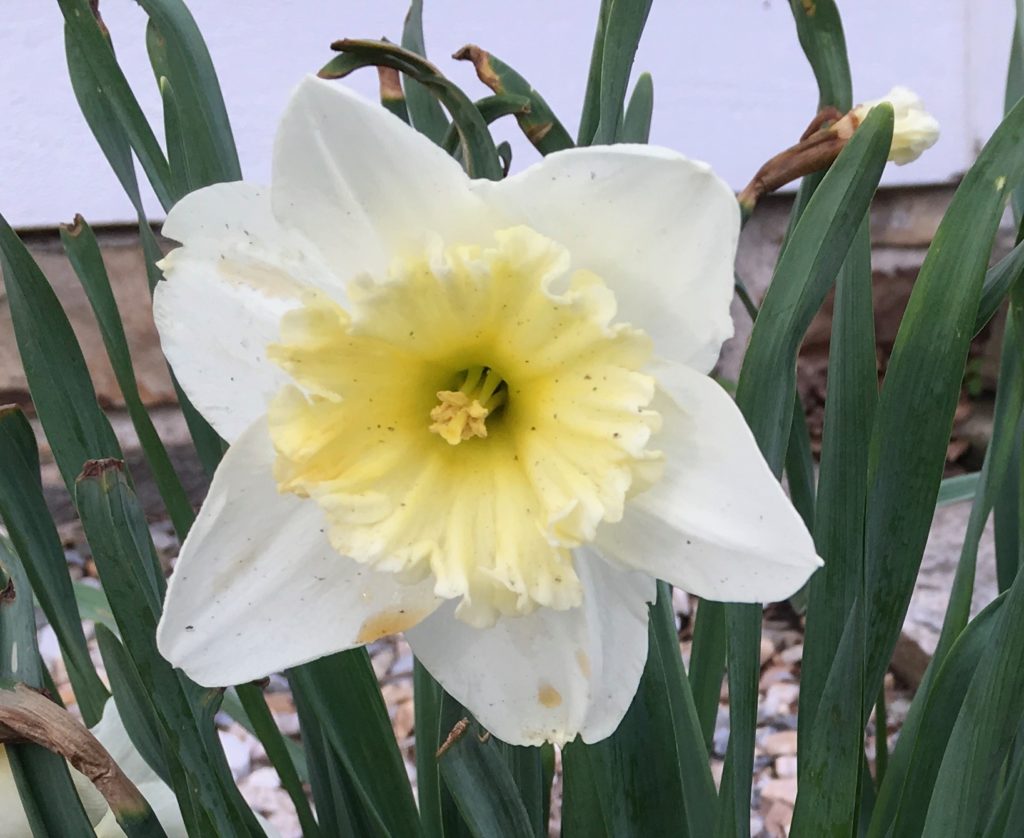
Those daffodils blooming when nothing else is, when there’s barely any green poking through the dirt is the hope, the sign that something special is yet to come.

“There are two ways to live your life. One is as though nothing is a miracle. The other is as though everything is a miracle.” Albert Einstein

Let There Be Light: Reflections on the Winter Solstice

December 22, 2018 By admin Leave a Comment

Today the sun rose at 7:23 am and set at 4:49 pm. That’s only 9 hours and 26 minutes of light and for those living north of me, they had even less today (only 8 hours and 56 minutes in Portland ME for example).  

Many people are doing a lot of complaining about the short days and the dark rather than celebrating.

Not only is today the shortest day of the year but the last full moon of the year, called the Cold Moon or the Long Night Moon, occurs in just a few more hours. And not to forget the annual Ursids meteor shower which peaks tomorrow also. All in all a very special day and night. 

In the good old days before Edison’s invention of the light bulb, our lives modeled nature. We rose with the sun and went to bed when it was dark. In the shorter days of winter, we rested and restored like the trees that dropped their leaves and slowed down and sent their energy down into their roots instead of up or like the animals who hibernated. 

Before electricity, some 130 years ago, the sun regulated our sleep cycle. When it got dark our brain activity slowed, our melatonin production increased and we prepared to sleep. When the sun rose, the cycle reversed.

Humans are diurnal– we function best if we sleep when it’s dark.

Jacob Liberman wrote in Light: Medicine of the Future (1991), “the cycles of human lives relate to the cycles of our environment”  or at least they should and that we are designed to respond to them just as plants and animals do. 

Since we now live in a 24/7 world that never goes to sleep, it has become harder and harder to honor our natural rhythms, cycles and seasons. This modern day lifestyle of working indoors, artificial light, sunglasses, sunscreen, not slowing down in the winter time in spite of the shorter hours of sunlight has led to millions feeling down and out in the winter time, the “winter blues”. 

 What was “once a time of year when nature assisted our inner growth by supporting us in going into the unlit aspects of our souls, has now become a time of depression and sadness dreaded by many.” (Liberman, p120).

I, for one, am heading outside to revel in the glorious full moon, hoping to see a few shooting stars, and grateful for this Long Night Moon and the longest night of the year. 

The Life and Death of a Family Friend …..and Some Lessons Learned

March 3, 2016 By admin Leave a Comment

Sasha joined our family on September 7, 2001 after I lost the battle with my strong willed, then 7 year old, daughter Martha. We’d been visiting the local shelters for a month looking for a young dog, NOT a puppy. I knew we’d “know” when we found our dog. Martha pushed and prodded for us to just look at this one puppy she’d discovered. Big ears, big feet, covered in poop and those speckled socks that never ceased to charm all who met her, I picked up this 4 month old Australian Shepherd mix who immediately leaned in to me, laid her head on my shoulder and my heart melted.

IMG_1687[3] copy

14 ½ years later my heart is melting again as we bid our dear friend farewell.

Sasha had been rescued from a barn at 6 weeks but this “kill” shelter didn’t follow protocol knowing that July and August are slow months for placing animals and that she was special, that she would find her forever home.


From the beginning she was always where the family was, sometimes inconveniently in the bathroom, and remained slim and trim from herding dogs and kids at the park and following everyone up and down stairs multiple times a day until she couldn’t.


Sashawestva

She loved her excursions to the woods in West VA and the beach. She loved the car until she didn’t when she could no longer get in on her own.


But we got one last fun visit to the beach where she ran on the beach forgetting for a bit her failing legs.FullSizeRenderbeach[6]

She never met a person or a dog she didn’t like. She greeted all with a wagging tail, a sniff and a kiss.


At 7 she was hit by a car in front of our house. It was my fault. I was talking to a neighbor across the street and Sasha darted across the street to say hello as well. Several ruptured organs, several surgeries (don’t ask the cost, it was money well spent) but she made a full recovery with the caveat that this type of traumatic injury would shorten her life. She had another healthy 7 years, comfortable and fully ambulatory until she wasn’t. First the hearing went, then the vision, then the back legs, then the will to make the trips upstairs to sleep by our bed or to get in the car.

We have been preparing for this day since September when she couldn’t stand on her own. With the help of steroids, she has had a comfortable and good, not great, 5 months but steroids wreak havoc on one’s hormones and liver. This week we knew the time had come to say goodbye.

Don’t cry because it’s over, smile because it happened.” Dr. Seuss

I have been blessed by her presence. We all need a dog to teach us a few lessons to make us better people, better parents, better friends. Patience (with unruly kittens and toddlers), Loyalty (always waiting at the door), Forgiveness (“All is Forgiven, I Still Love You” her beautiful brown eyes always said to me, even when I’d acted out in frustration or anger), Play (work is overrated, play ball and have some fun, play with our wonderful mailman Louis who patiently put one letter at a time through the mail slot for her to grab but never destroy) and, of course, Love.

Unable are the loved to die for love is immortality.” Emily Dickinson

 Our pets provide some of the happiest moments in our lives and their unconditional love and loyalty ease us through some of our unhappiest moments. 14 years in a family are an awful lot of ups and downs, wins and losses and transitions and milestones. A four legged friend makes them all better, easier, happier or less painful and I am grateful for each one she shared with us.

Don’t grieve. Anything you lose comes round in another form.” Rumi, 13th c Persian poet & theologian

I am grateful that we did not have to make a final car ride, that our gentle and kind vet came to us so that our sweet Sasha drifted away peacefully in the home she has so enriched.

IMG_1720[5]

 The song is ended but the melody lingers on.” Irving Berlin


LET THE SUN SHINE IN

February 11, 2016 By admin Leave a Comment

In the good old days before Edison’s invention of the light bulb, our lives modeled nature. We rose with the sun and went to bed when it was dark. In the shorter days of winter we rested and restored like the trees that drop their leaves, slow down and send their energy down into their roots or like the animals who hibernate.

Liberman explains clearly throughout his book, Light: The Future of Medicine,  “how the cycles of human lives relate to the cycles of our environment” or at least should and that we are designed to respond to them just as plants and animals do. However, since we now live in a 24/7 world that never goes to sleep, it has become harder and harder to honor our natural rhythms, cycles and seasons. This modern day lifestyle of working indoors, artificial light, sunglasses, sunscreen, not slowing down in the winter time in spite of the shorter hours of sunlight has led to millions feeling down and out in the winter time, the “winter blues”.

What was “once a time of year when nature assisted our inner growth by supporting us in going into the unlit aspects of our souls, has now become a time of depression and sadness dreaded by many.”

French physician, J.F. Cauvin, wrote his PhD thesis on the benefits of sunlight for the “sad and weak” in 1815 (p121). As the human population expanded northward away from equator combined with the onset of industrialization (cities, artificial light, working indoors), the reports of a winter melancholy grew. Northeast snowbirds going to FL in the 20th c have nothing on the northern Europeans traveling to the south of France and Italy in the 19th c. Intuitively humans have known they need light even if they didn’t understand why.

Symptoms such as depression, sleeping more, eating more, gaining weight, decreased libido, personality changes, decreased energy, poor concentration, social withdrawl, brain fog and fatigue are typical of what was simply called the “winter blues” but it wasn’t until 1980-1981 that we understood the physiological reason for these mood changes and a name was actually given to this group of symptoms.

In 1980 we finally understood the importance of melatonin secreted by the pineal gland. Dr.’s Alfred Lewy and Thomas Wehr “discovered that bright light could suppress the nighttime secretion of melatonin” while working at the NIH’s Institute of Mental Health (NIMH). This discovery led to the conclusion that bright artificial light could counter balance the effects of the shorter days of winter and that if our moods are regulated by melatonin and our melatonin is regulated by the pineal and the pineal is regulated by light then our best anti-depressant is light .

At about the same time, Dr. Norman Rosenthal, a psychiatrist, put a name to this group of symptoms who was also working at the NIMH. This melancholy that had been referred to in literature since the early 1800’s was named Seasonal Affective Disorder in 1981. Not only did Rosenthal and his team name this disorder but pioneered the use of “light therapy” for it’s treatment.

Since the majority of sufferers (and the estimate is around 25-35 million Americans) are not likely to make all the lifestyle changes that could alleviate the symptoms such as moving to the tropics, a light box used primarily in the morning hours that mimics the sun at high noon can help reset the body’s clock and increase the production of serotonin. “Bright light treatment has been scientifically documented by so many different controlled studies internationally that it is considered the treatment of choice for SAD” (p124).

Lack of light has psychological effects beyond wintertime SAD. Non seasonal depression, eating disorders particularly bulimia, addictions, detoxification and withdrawl, PMS emotional symptoms and plain old garden variety stress and anxiety all respond to the introduction of bright light and are most likely caused or at least worsened by the lack of light.

New York psychiatrist Victor Frankel in the 1960’s (years before melatonin and the pineal gland were given their rightful place of importance and SAD was acknowledged as real) found different colored lights triggered memories and stress and that the right (for that individual) colored lights relieved and removed the negative memories and stress. He hypothesized that “removing stress from the mind not only reduces disease but also unleashes human creativity”.

Quite by accident in the early 1970’s Dr. Irving Geller, a Texas pharmacologist, discovered what he called, “darkness induced drinking phenomenon”. When a light timing device broke in his lab that didn’t turn the lights on and off as programmed, his rats went on alcohol drinking binges. Further studies showed increased levels of melatonin lead to an increased desire for alcohol. Now we know why cocktail lounges are always so dim and dark!

Some may think love makes the world go round as the song says, but is truly is Light that makes your world go round.


The body is the most brilliant computer that was ever designed. There will never be a computer smarter than the human body. Given the proper encouragement and the proper information, the body heals itself.” Hanna Kroeger, ND


You Don’t Know What You Don’t Know

August 18, 2015 By admin Leave a Comment

Is this article in today’s Washington Post a “Known Unknown” or an “Unknown Unknown”. I think the latter. But I am always excited to learn about both.

The benefits of LED Light Therapy for reducing pain and increasing circulation are a Known Unknown.

“Known unknowns result from phenomena which are recognized, but poorly understood. On the other hand, unknown unknowns are phenomena which cannot be expected because there has been no prior experience or theoretical basis for expecting the phenomena.”

The benefits of LED Light Therapy are known and recognized in scientific circles and include many 100’s of studies on LLLT (low level light therapy)  but are mostly unknown by the general public.

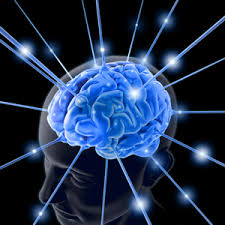
This exciting discovery about the brain’s lymphatic system…..meaning the brain has a way to get the garbage out……is an Unknown Unknown….new to everyone.

What is particularly exciting to me is the possibility that this Unknown Unknown may enable a Known Unknown (that light therapy increases circulation wherever the light is placed) to become a Known Known  (red and near infrared light therapy can penetrate the skull, increasing circulation to the brain, bringing nutrients in and taking garbage out, alleviating the symptoms of many problems affecting the brain).

“Scientists find the brain’s missing ‘pipes’ by Amy Ellis Nutt

brainimages

“Throw out the textbooks” and “missing link” are words rarely heard anymore in science, but that’s what researchers around the world are saying about the recent discovery of microscopic lymphatic vessels connecting the brain to the immune system…….Click to read more…….. Scientists find the brain’s missing ‘pipes’


“Reports that say that something hasn’t happened are always interesting to me, because as we know, there are known knowns; there are things we know we know. We also know there are known unknowns; that is to say we know there are some things we do not know. But there are also unknown unknowns- the ones we don’t know we don’t know.” 
― Donald Rumsfeld, 2002


Lights, Camera, Action….2015 is the International Year of Light!

January 20, 2015 By admin Leave a Comment

Did you know that 2015 is the International Year of Light & Light Based Technologies?

UNESCO delegates from Ghana and Mexico introduced the idea for an International Year of Light in 2012 to raise awareness of the achievements of Light Science and it’s applications.

UNESCO and a number of scientific organizations, educational institutions, non profits, technology platforms and the private sector are sponsoring the IYL 2015 which will include exhibits, workshops, conferences.

Today is the opening ceremony in Paris at UNESCO’s headquarters kicking off a year of coordinated activities throughout the world.

100 partners from 85 countries all working together.

The purpose of IYL 2015 is to raise awareness of the achievements of Light Science and it’s applications. The IYL goal is to ensure that international policymakers are made aware of the problem solving potential of light technology.

What does this mean to you? Perhaps you think not much since light whether natural (the sun) or artificial (light bulbs) is something we take for granted and we’ve forgotten most of our high school science.

Light based technologies can provide solutions to an array of global challenges – in energy, in education, in agriculture and, of course, health.

We are human photocells. Light is the ultimate biological nutrient.  Gabriel Cousins, MD


http://www.light2015.org/Home.html


Recent Posts

  • Whittle Your Wattle
  • Sweat Equity….Literally
  • Firework
  • Lipstick on a Pig or Transformation?
  • Possibilities………..

Blog Archives

  • 2019
  • 2018
  • 2016
  • 2015
  • 2014
  • 2013
  • 2012
  • 2011
  • 2010

[footer_backtotop]

Copyright © 2026 | Website design by Masselyn